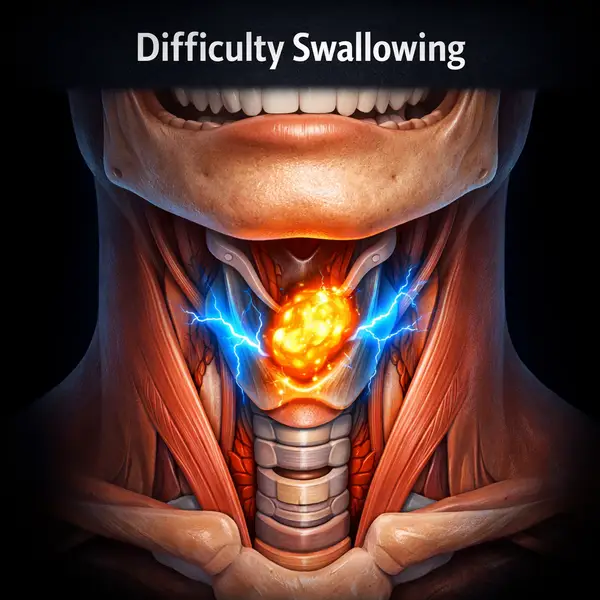
Dysphagia, commonly described as difficulty swallowing, is a condition in which food or liquids fail to pass smoothly from the mouth to the stomach. Instead of being automatic, swallowing starts to feel like a mechanical task, similar to forcing something through a narrow or blocked tube. This shift from ease to effort is often the first sign that the swallowing mechanism is impaired.
Difficulty that develops during swallowing affects roughly 10–15% of adults at some point, with prevalence increasing sharply in older age. Dysphagia is more frequently seen in people with neurological disorders, chronic gastroesophageal reflux, or structural abnormalities of the esophagus, though it can also occur without an obvious cause. Despite its frequency, many people delay evaluation until symptoms interfere with eating or hydration.
When meals become unpredictable and even small bites trigger repeated trouble or discomfort, swallowing problems stop being a nuisance and become a clinical concern. Identifying the underlying causes, recognizing warning signs, and understanding available treatment options are essential to managing dysphagia effectively. A structured look at these factors helps turn a vague symptom into a clearly defined medical condition.
Pro Tip: This Portable Water Flosser is up to 50% more effective than traditional floss and can save you hundreds on professional dental cleanings. Its 300ml tank and cordless design make it perfect for maintaining healthy gums. Check the current deal on Amazon.
What It Feels Like
Patients describe dysphagia in different ways. Some feel a lump in the throat, others notice coughing or choking during meals, and some experience chest discomfort after swallowing. Liquids may go down the “wrong pipe,” or solid foods may seem to pause halfway. According to guidance from major U.S. medical centers ⧉, these sensations can involve the throat, chest, or both.
Symptoms may appear suddenly or progress gradually over weeks or months. Weight loss, dehydration, and repeated respiratory infections can quietly follow if swallowing difficulty is left untreated—one of those problems that tends to snowball when ignored.
Common Causes
Dysphagia is not a disease itself but a symptom with many possible causes. Structural problems such as esophageal narrowing, inflammation, or tumors can physically block food passage. Functional causes include nerve or muscle disorders that impair coordination, often seen after stroke or in neurodegenerative conditions.
Gastroesophageal reflux disease is another frequent contributor, where chronic acid exposure leads to irritation and scarring of the esophagus. As noted by gastroenterology specialists ⧉, long-standing reflux can gradually reduce esophageal flexibility, making swallowing more difficult over time.
Dental Care: This Rotating Electric Toothbrush removes up to 400% more plaque than a manual brush. With a built-in pressure sensor and 8 replacement heads included (a 2-year supply), it’s a cost-effective way to maintain a professional clean at home. Available on Amazon.
Who Is at Risk
Older adults face a higher risk due to natural muscle weakening and slower nerve signaling. People with a history of stroke, head or neck surgery, or chronic neurological conditions are also vulnerable. Even dental problems or poorly fitting dentures can interfere with the early stages of swallowing—sometimes the simplest explanation turns out to be the right one.
Reyus Mammadli, medical consultant, emphasizes that dysphagia should never be dismissed as “just aging.” In his clinical observations, early evaluation often prevents serious complications and significantly improves quality of life.
Diagnostic Evaluation
Accurate diagnosis begins with a detailed medical history and physical examination, followed by targeted testing when needed.
A modified barium swallow study involves swallowing liquids and foods mixed with contrast while X-ray video is recorded. Upper endoscopy uses a flexible camera to examine the esophagus and stomach lining. Manometry evaluates pressure and muscle timing within the esophagus and is particularly useful when structural problems are not obvious ⧉.
Treatment Approaches
Treatment depends entirely on the underlying cause. For reflux-related dysphagia, acid-suppressing medications (such as proton pump inhibitors like omeprazole or pantoprazole) and dietary adjustments are commonly effective. Structural narrowing may require endoscopic dilation using specialized balloons or dilators.
Neuromuscular causes often benefit from swallowing therapy guided by a speech-language pathologist, using targeted exercises and adaptive techniques. In select cases, minimally invasive procedures or surgery may be recommended. Reyus Mammadli notes that modern dysphagia care increasingly relies on multidisciplinary teams, which significantly improves outcomes compared to single-specialty management.
A U.S. Clinical Example
A 68-year-old man from Ohio developed progressive difficulty swallowing solid foods over six months, accompanied by unintended weight loss of 12 pounds (about 5.4 kg). Diagnostic endoscopy revealed a reflux-related esophageal stricture. After endoscopic dilation and medication therapy, his swallowing improved within weeks, and he regained weight gradually. This case reflects a common and highly treatable scenario seen across the United States ⧉.
When to Seek Help
Immediate medical evaluation is warranted if swallowing difficulty is accompanied by chest pain, choking, or inability to swallow liquids. Even mild but persistent symptoms lasting more than two weeks should be assessed. Early care often means simpler treatment—waiting rarely works in the patient’s favor.
Editorial Advice
Difficulty swallowing is a symptom that deserves respect, not fear, but certainly not neglect. Paying attention to early changes, seeking timely evaluation, and following evidence-based treatment plans can prevent serious complications. Patients are encouraged to advocate for thorough assessment and coordinated care, especially when symptoms persist. Swallowing should feel natural—if it does not, it is time to listen to the body and act.